The Waiting: An Advent Meditation

The Advent Season is actually all about waiting. Waiting for the light of the world to come. Waiting for a breakthrough in this sinful world. Waiting for hope to come in the midst of experiencing pain. Waiting for Jesus.

  • Mary & Joseph waited for nine months to see their newborn baby
  • Zechariah and Elizabeth waited tirelelssly into their old age to have a child. And then Zechariah had to wait around until he saw baby Jesus to be able to speak again!
  • Centuries of prophets and believers before us waited for the coming Messiah and salvation of the Lord.
  • Simeon and Anna, two devout individuals who spent years in the Temple in Jerusalem, faithfully waiting and praying for the arrival of the Messiah, recognizing baby Jesus when he was presented.

Waiting can make us feel really uncomfortable. 

There 2 realities about waiting:

1.) Waiting brings self-examination. It is NOT a passive action. Waiting does not mean stalled, it means stillness. There is activity in being still. Anybody who stops and waits for a moment knows there is activity in being still. Where is the activity? OUR HEART. OUR MIND.

Waiting forces us to be present to the activity of our mind and heart. This is why people so often hate waiting. What do we automatically do when waiting in line at the store or sitting on the train? Phone. Distract. Disassociate. Being present to our heart and mind can be scary because: 1.) There are things we donโ€™t like about ourselves, 2.) We are discontent with how our life is going, 3.) There is pain and disappointment we are avoiding feeling.

But there is good news. There is light in the midst of that discomfort and pain.

2.) Waiting brings intimacy. Remember what was just saidโ€“ waiting does not mean stalled, it means stillness. And the Lord OFTEN calls us into stillness with Him. And stillness, if we fully embrace it, can be an avenue for us to be fully present to the presence of God. Waiting gives us time to not only examine ourselves, but to actively examine who he is. We get the chance to turn our eyes to him, really look at him, and remember the Light of the World. We get to remember His character, strength, peace, love, and we get to HEAR his healing voice that calls out to us so gently.

Itโ€™s almost funny, because the Christmas season gets BUSIER, at least for me!ย Our calendars are filled to the brim. So in a time of craziness, noise, Christmas songs, lightsโ€ฆ Let’s pause and wait just like Mary, Joseph, Zechariah, the prophets, David, and so many others have done.

1. Becoming Present

MEDITATION
Letโ€™s take a moment to settle our bodies. You may want to place both feet on the floor, hands open on your lap.

Gently close your eyes.

Thereโ€™s nothing you need to do right now. Nothing to fix. Nothing to perform.

Just to be here.

(Pause 30 seconds)

As we enter this time of waiting, we remember the words of Scripture:

โ€œBe still, and know that I am God.โ€
(Psalm 46:10)

Stillness is not inactivity.
Stillness is attention.
Stillness is presence.

___________________

2. Noticing the Activity Within

As you sit in this stillness, simply begin to notice what is happening inside you.
Thoughts may come.
Emotions may surface.
Restlessness, peace, distraction, heaviness, longing.

There is no need to judge what you notice.
No need to push anything away.
Just notice.

Scripture tells us:

โ€œFor God alone my soul waits in silence.โ€
(Psalm 62:1)

Waiting brings us face to face with our own hearts.
And God is not afraid of what you find there.

(Pause 1 minute)

If something uncomfortable risesโ€”
a disappointment,
a sadness,
a frustration,
a place of discontentโ€”
simply acknowledge it.

You might quietly pray:
โ€œLord, I see this.โ€
โ€œLord, you see this.โ€

(Pause 1 minute)

___________________

3. Waiting Is Trust

Listen to these words:

โ€œThe Lord is good to those who wait for him,
to the soul who seeks him.
It is good that one should wait quietly
for the salvation of the Lord.โ€
(Lamentations 3:25โ€“26)

Waiting is not wasted time.
Waiting is trust practiced slowly.

As you sit, imagine yourself placing whatever you are waiting for into Godโ€™s hands.
A situation.
A relationship.
A decision.
A breakthrough you long for.

You donโ€™t need to explain it to Him.
He already knows.

(Pause 1 minute)

___________________

4. Turning Our Attention to God

Now, gently shift your attention away from what you are waiting for, and toward who you are waiting with.

Listen to this Scripture:

โ€œI wait for the Lord, my soul waits,
and in his word I hope.โ€
(Psalm 130:5)

Bring to mind the character of God.
His faithfulness.
His gentleness.
His strength.
His nearness.

Advent reminds us that God does not rush past human painโ€” He enters it.

(Pause 1 minute)

___________________

5. Listening

The Bible says that we are all able to hear the voice of God.

In 1 Kings, we see that God speaks to Elijah through a gentle whisper. In order to hear someone whisper, it requires proximity. Jesus is close to you now. I think thatโ€™s why God came to Elijah in a whisper, to show that when he speaks, and does so intimately. Closely.

For the next few moments, we simply listen.
Not forcing words.
Not chasing thoughts.

If a gentle phrase, image, or sense of peace comes, receive it.
If nothing comes, that is okay too.
Waiting itself is the prayer.

(Long pause โ€“ 2 minutes)

___________________

6. Hope in the Waiting

Listen to these final words:

โ€œBut they who wait for the Lord shall renew their strength.โ€
(Isaiah 40:31)

Waiting renews usโ€”not because the waiting is easy, but because God meets us there.

As we come to a close, letโ€™s remember again the One for whom all those before us were waiting:

โ€œFor a child is born to us, a son is given to us. The government will rest on his shoulders. And he will be called: Wonderful Counselor, Mighty God, Everlasting Father, Prince of Peace. His government and its peace will never end.โ€
(Isaiah 9:6โ€“7)

___________________

Closing Prayer

Lord,
Teach us to wait well.
To be still without fear.
To trust without rushing.
And to recognize Your presence with us
Amen.
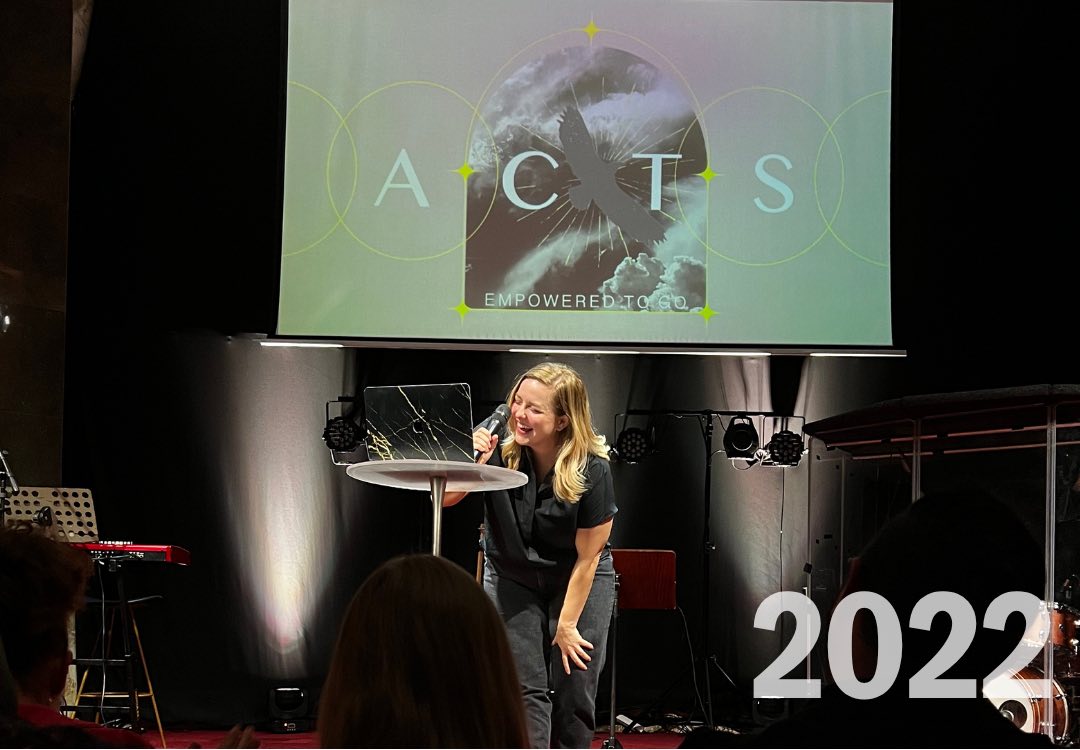
10 Years

10 Years at ICB.

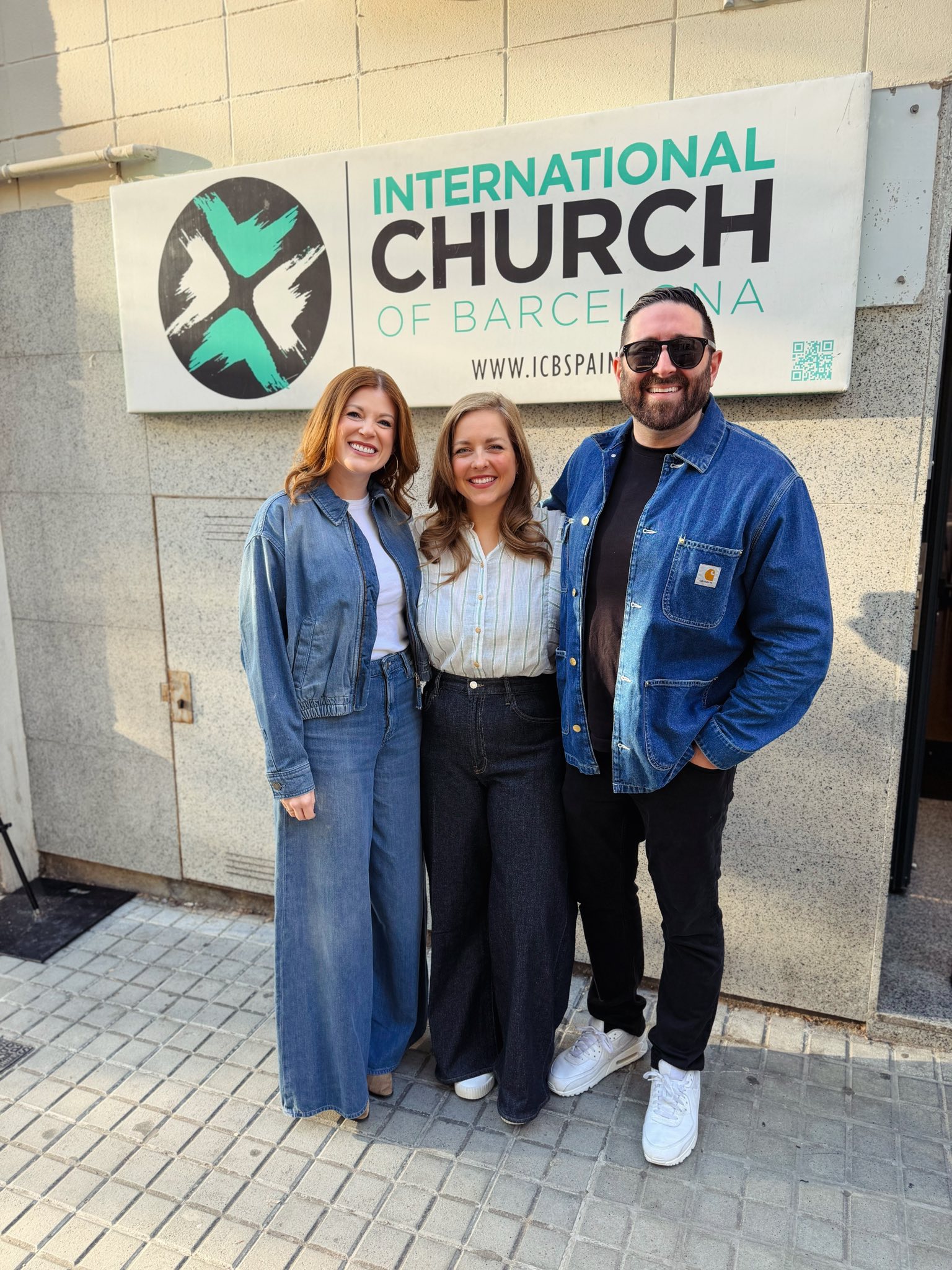
November 2, 2025, marks a decade of ministry serving this beautiful church family.

I (cautiously) say that I have inched towards understanding 2 Peter 3:8, โ€œWith the Lord a day is like a thousand years, and a thousand years are like a day.โ€ We are created in His image after all, arenโ€™t we? On one hand, the thought of a decade SHOCKS me as it feels like I landed yesterday. The past 10 years have flown by like a day.

And yet when I leafed through old photos, I was overwhelmed at the sheer amount of meaningful moments that have filled my life at ICB. I have โ€œloggedโ€ countless hours of intense joy and beautyโ€ฆ complex empathy and griefโ€ฆ spiritual growth and self-actualization. All the moments formed me to be the friend and leader I am right now; my love for the Word evolved into a preaching skill; and I pray (only by the grace of God) that I have been able to be the love of Jesus to many souls.

This decade with my ICB family has been a gift that my own heart cannot fully contain or comprehend. Perhaps thatโ€™s why a decade can feel like a day at timesโ€” our human hearts arenโ€™t built to hold all the goodness, grief, and joy this life gives us. But Iโ€™m so grateful for all of the days that are also worth a thousand.

We fast to FEAST

Listen to the whole sermon on fasting HERE [at 39:30]

This week, our church is entering a time of Prayer & Fastingโ€”something we do every January and September to set aside space to seek God in a focused way. Weโ€™re encouraging our community to participate, but I want to extend the invitation to you as well! If youโ€™d like to join us, you can download the 1-week Prayer & Fasting Journal (available in English and Spanish), which includes daily devotionals, scripture, and prayer points to guide you.

So why fasting? Fasting is not about dieting, punishing ourselves, or trying to earn Godโ€™s approval. Instead, fasting is about making spaceโ€”setting aside one appetite so our spiritual appetite can truly feast. Hunger pangs or missed routines become reminders to turn our hearts back to God.

Fasting is depriving one appetite to feed another appetite.

And true fasting always leads to transformation. It draws us into Godโ€™s presence, softens our hearts toward others, and frees us to live more like Jesus.

Hereโ€™s the image God gave me as I prayed for this week: a huge banquet table overflowing with delicious things. Scripture, prayer, worship, fellowshipโ€”all of it is laid out before us. But more than the meal itself, the reward is the One sitting across the table.

The purpose of a spiritual meal is not to consume but to commune.

Whether youโ€™ve fasted before or this is brand new, youโ€™re invited. God has made Himself โ€œfindable,โ€ and as we seek Him, He promises we will encounter Him!


We are Built for Safety

We all experience pain in life– some of it deep and long-lasting. The amazing part is that God created us with built-in systems to protect ourselves from pain. Think about our automatic physical responses (fight, flight, freeze). Studies show that our brains are creating neuro-pathways from infancy– reading out environment and creating behavioral patterns to help protect ourselves emotionally. We are built for a safe place. God, our creator, built us for safety! What does this tell us about Him? He cares for our protection. He cares about our hearts. Our emotions. Our wellbeing.ย 

But in our lives, we experience pain, suffering, betrayal, trauma, sinโ€ฆ And we begin to build up strongholds as a protection around ourselves. Out of our pain and suffering, we create seemingly “safe places” to protect us against future attack. We begin to form a BELIEF SYSTEM out of our hurtful experiences.

But if we never submit these belief systems to the Word of God, with the voice of God that speaks His truthโ€ฆ these strongholds, these safe places, actually become a PRISON. When we are no longer allowing our lives to be transformed by Godโ€™s truth and Godโ€™s voice, we are TRAPPED BY our own painful experiences.

Stronghold Definition: A place that has been fortified so as to protect it against attack. A place where a particular cause or belief is strongly defended or upheld

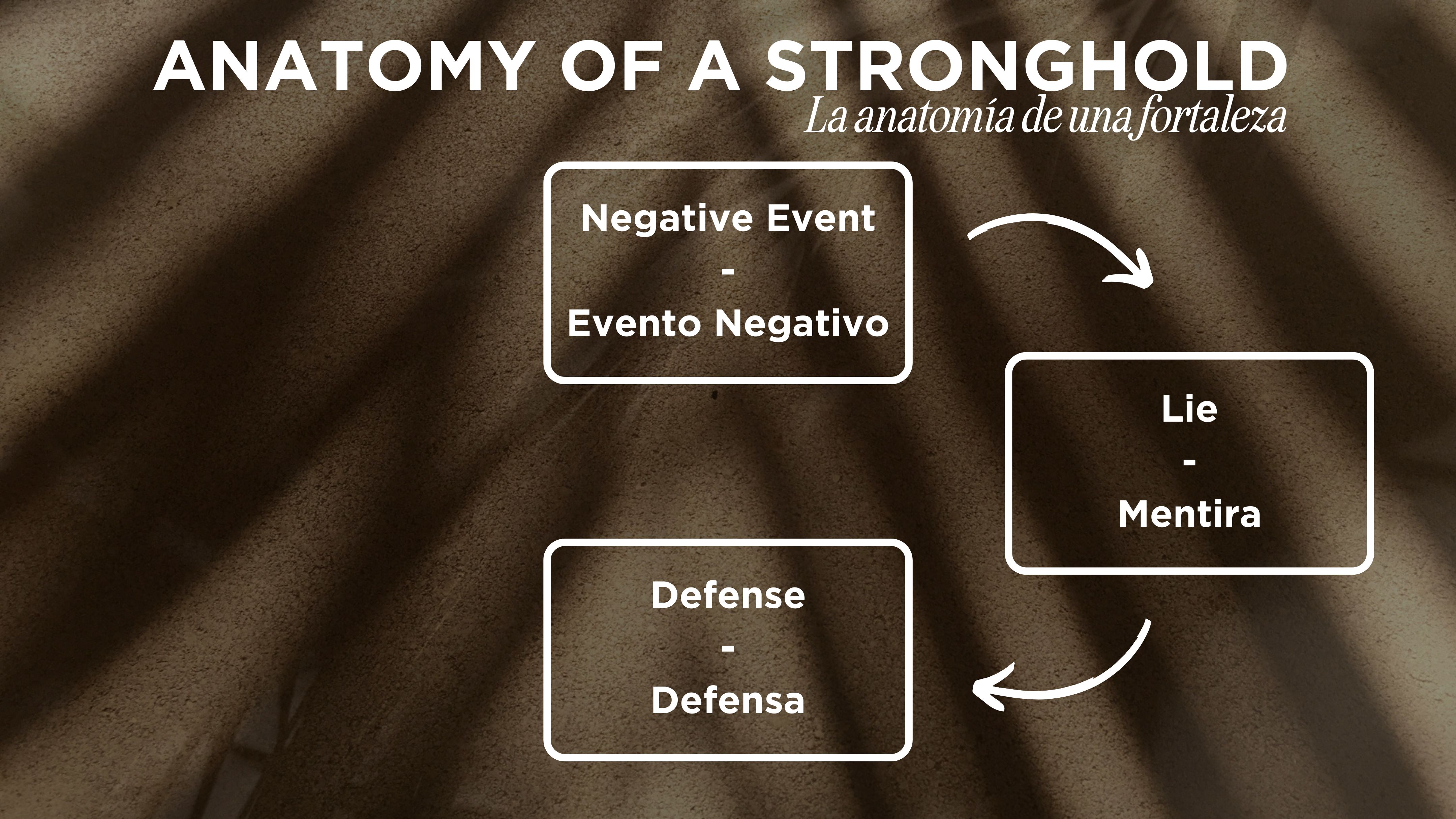
    HOW ARE STRONGHOLDS FORMED?

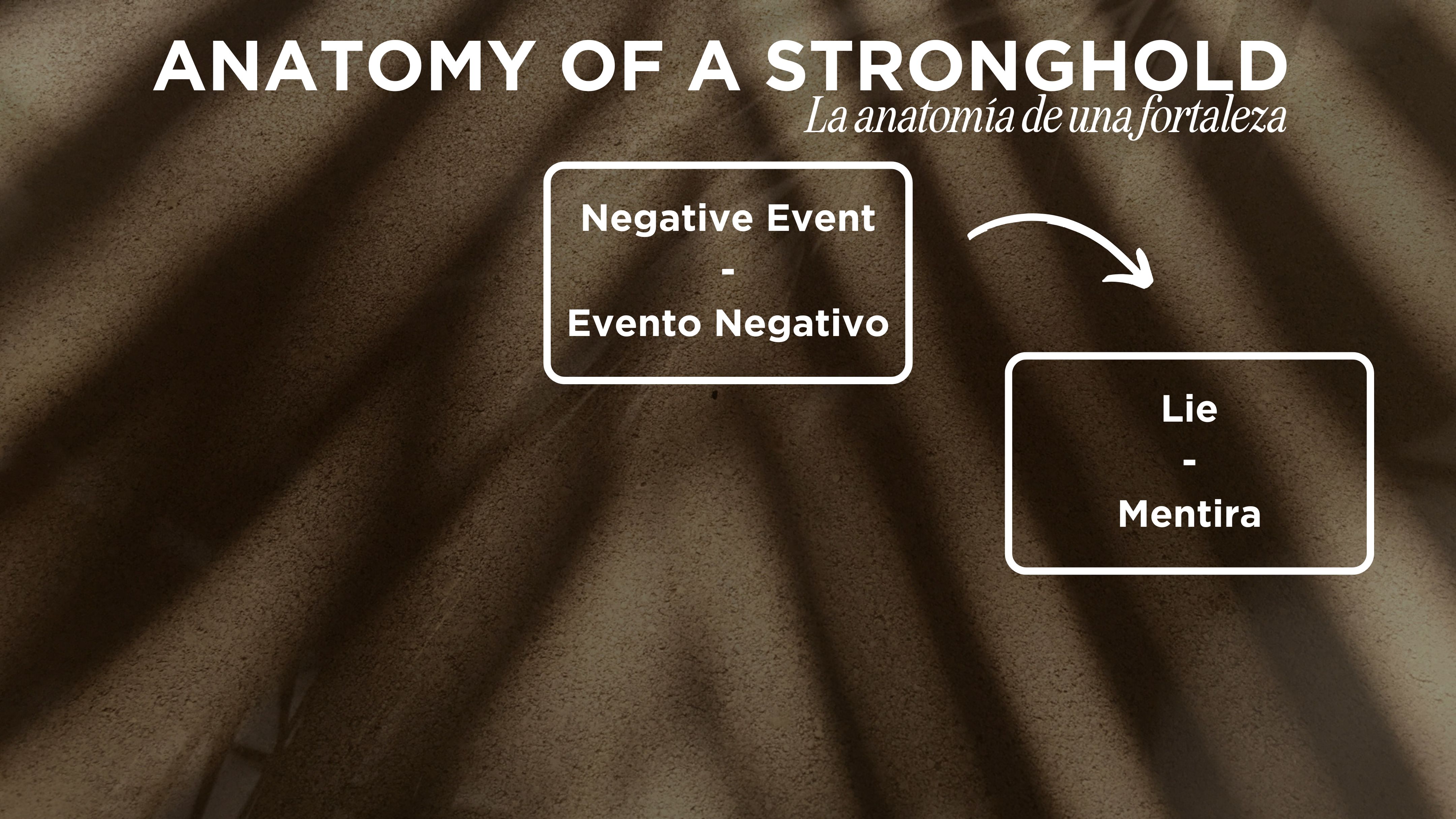
    It begins with a negative event…

    1.) NEGATIVE EVENT

    • Hurts & Trauma
    • “What I did not experience”
    • Generational Inheritance
    • Genetic Inheritance (epigenetics)
    • Spiritual Inheritance (3rd & 4th gen)
    • Family Culture

    Out of that negative event, we believe a lie. Why is it a lie? Because it does not line up with Godโ€™s truth. We create a โ€œfalse truthโ€ in our hearts– a โ€œlensโ€ to see the world byโ€“ in order to protect ourselves from any future hurt.

    2. LIE

    • โ€œThatโ€™s the way it is in my life!โ€
    • Lies I believe about God
    • Lies I believe about others
    • Lies I believe about myself
    • Lies I choose & lies I inherit and embrace
    • Lies are the meaning assigned to the event

    And now. Itโ€™s time for us to build up a strongholdโ€“ a defenseโ€“ to keep us from ever experiencing that pain again. Because WHO wants to experience that kind of pain again? “HOW can I protect myself from that?

    3. DEFENSE

    • Denial
    • Emotional Insulation
    • Repression
    • Anger
    • Projection/Externalization
    • Blame
    • Preemptive Rejection
    • Minimization
    • Withholding Trust
    • Busyness
    • Passive Aggression
    • Acting Out
    • Fantasy
    • Intellectualization
    • Rationalization

    The problem is, when we believe LIES about ourselves, about God, about othersโ€ฆ and then we build up a DEFENSE to protect us from that pain in the futureโ€ฆ We then REACT out of the stronghold, that defenseโ€ฆ And people then REACT back to usโ€ฆ

    4. OTHERS REACT

    “I’ve been rejected by my best friend before… I can’t trust anyone. I’m going to withhold trust and vulnerability in the future to protect myself.” But happens when those future friendships sense that you’re withholding trust from them? That you’re distant? What happens when they feel like they can’t get close to you? They don’t draw close to you either… they pull away… And what happens when we receive their reaction? “See I KNEW I couldn’t trust anyone! Everyone always leaves me in the end.”

    And this is why the Anatomy of a Stronghold is a FULL CIRCLE.ย This is why sometimes we feel chained to our pain, and we canโ€™t see a way out. This is how all of us fall to unhealthy patterns and feel imprisoned by our trauma. Remember what I said earlierโ€“ these strongholds, these supposedly โ€œsafe placesโ€, actually become a prison. But there is GOOD NEWS.

    We have a loving God who views our pain and CARES FOR OUR HEARTS. He doesnโ€™t just care for our transformation, He IS our transformation. He doesnโ€™t just speak ‘nice thoughts’, but LIFE and TRUTH into our lives. There is a way out of that cycle of pain and lies, and that way out is Jesus.ย And He doesnโ€™t just provide a safe place, He IS THE SAFE PLACE.

    Psalm 18:2
    The Lord is my rock, my fortress and my deliverer;
    ย  ย  my God is my rock, in whom I take refuge,
    ย  ย  my shield and the horn of my salvation, my stronghold.

    And it is out of that presence-driven relationship with Him that we find freedom and truth: NOT what the world tells us, our experience tells us, or what our pain tells us.

    2 Corinthians 10:3-5 (NKJV)
    โ€œFor though we walk in the flesh, we do not war according to the flesh. 4 For the weapons of our warfare are not carnal but mighty in God for pulling down strongholds, 5 casting down arguments and every high thing that exalts itself against the knowledge of God, bringing every thought into captivity to the obedience of Christโ€

    There are arguments in our minds that go AGAINST the knowledge of God. And Jesus has provided freedom from those lies. The Message says, โ€œWe use our powerful God-tools for smashing warped philosophies, tearing down barriers erected against the truth of God, fitting every loose thought and emotion and impulse into the structure of life shaped by Christ.โ€

    Throughout our lives, we have accepted, consciously or unconsciously, knowledge that is not from God. There are lies written all over our hearts that are not aligned with the truth of Jesus. And we are CALLED to rip down those lies, those strongholds, and receive the true knowledge of God. We are called to agree with Godโ€™s voice, His Word. How do we do this?

    Verse #5 says: We take every thought captive, and we bend it to obey Jesus.


    REFLECTION:

    REPLACE THE LIES

    • Hear God: What is the lie?
    • Confess/Receive Forgiveness
    • Renounce (Engage Your Will)
    • Forgive
    • Hear God: What is your truth?
    • Believe
    • Confess

    NEW DEFENSE

    • Hear God: How have I put up a false defense?
    • Confess/Receive Forgiveness
    • Renounce (Engage Your Will)
    • Forgiveย 
    • Hear God: How will you defend me in the future?
    • Believe
    • Confess

    โ€œLook what God can doโ€

    I was humbled when recently asked to speak a short sermon at our AGWM all-Europe missionary retreat. The theme of the week was โ€œYou never know what God can do through ______ planted in faith.โ€ Below, youโ€™ll find part of the transcript of what I got to share with 450 colleagues. I pray it encourages you today!

    ____________________________


    โ€œYou never know what God can do through LOSS planted in faithโ€

    As the saying goes, there are only 2 things certain in life: death and taxes. If I were to add an addendum to this, it would include loss. We all experience loss. Loss of life of someone close, loss of marriage, loss of close friendship, loss of a dream and future that you absolutely believed that God had given you! Loss of hope for having children when that test comes back negative yet again. Loss is an absolute unavoidable part of our life here on this earth.

    And no matter how much we talk about it, read about it, spiritualize it, listen to podcasts about it, nothing quite prepares you for true loss until itโ€™s your turn to walk through it. Something that should be so unifying (being the fact that we all walk through loss at some point), actually becomes one of the loneliest and most unavoidable pains. As much as we love it to be so, no amount of prayer or throwing Bible verses at it gives us a fast pass through grief. Even CS Lewis, honestly states in A Grief Observed, โ€œTalk to me about the truth of religion and I’ll listen gladly. Talk to me about the duty of religion and I’ll listen submissively. But don’t come talking to me about the consolations of religion or I shall suspect that you don’t understand.โ€ So for those of you who are here currently deep in the trenches of loss today, I do not offer you my religious consolations. But I do offer you my understanding. My heart has ached as well. I have also been in the place where I couldnโ€™t see how life could continue. I do understand. And Iโ€™m so sorry for the unavoidable pain that you are consumed with right now.ย 

    I think we as Christians sometimes subconsciously believe that we shouldnโ€™t feel pain, as if feeling the pain instead of โ€œreceiving the joy of the Lordโ€ is somehow a less holy state to be in. But experiencing the pain that this life offers usโ€” actually noโ€” that this life FORCES on us (โ€œoffersโ€ makes it sound like a choice)โ€ฆ experiencing the pain that is inevitably a part of life is JUST AS SACRED as experiencing the joy of life. Experiencing pain is both divine and human.

    And letโ€™s not go knocking the human experience, because Jesus himself chose it! He chose it not just by creating humanity, but by entering into it. He actually dignified our human experience by choosing weaknessโ€“ by choosing to become human.

    And Jesus didnโ€™t rush past loss.

    Jesus didnโ€™t rush to Lazarusโ€™ tomb to call him back to life, dismissing the pain of loved ones around him. He stopped and wept moments before fixing the issue that caused the weeping. The over-spiritualized optimist would say Jesus stopping to weep was unnecessary. โ€œDeath has no sting!โ€ But he stopped and grieved all the same.

    Jesus also didnโ€™t rush to the cross, dismissing his own anguish and pain. He sat in the Garden of Gethsemane and labored in prayer, to the point of sweating blood. 

    If we truly mean that we want to know Jesus in all of his personhood, then experiencing loss is a part of that. Instead of rushing past grief, we can draw closer to the presence of Jesus in a way that we NEVER could WITHOUT that loss. God walked through loss, therefore there are parts of God that we cannot know unless we walk through it!

    While I am personally still healing today, I still do not want to feel this pain, oh what a privilege it is to be able to know and understand and empathize with God in a way that I never could before.

    โ€œYou never know what God can do through LOSS planted in faithโ€

    At first, I thought putting the word โ€œlossโ€ into this prompt that I was given sounded a bit out of place. But loss does require death. And what do you do with a dead thing but place it in the ground?

    Jesus tells us in: John 12:24 โ€œI tell you the truth, unless a kernel of wheat is planted in the soil and dies, it remains alone. But its death will produce many new kernelsโ€”a plentiful harvest of new lives.โ€

    Loss fully planted into the groundโ€“ into the graveโ€“ always produces new life. Itโ€™s never the same life, whatโ€™s buried is buried, but there is still a PROMISE of harvest and new life!

    And the beautiful part, which is highlighted in this verse, is that a seed that is buried does NOT remain alone. So when you find yourself in a season of loss, know this: you are not done, forgotten, or failing. You are being held by the same Savior who chose to walk through suffering Himself. Jesus is with you, and he doesnโ€™t give his religious consolations eitherโ€“ but He gives you his PROFOUND understanding and loving embrace. 

    New life is comingโ€”even if you can’t see it yet. A seed buried in the soil is in complete darkness. So even if you feel buried by your sadness, even if you canโ€™t see it, new life is coming. So donโ€™t rush past it. Plant it. Water it with tears. Draw close to your Jesus in ways that you canโ€™t in times of joy. And watchโ€”one dayโ€”what God will do with your loss sown in faith.

    Sant Jordi

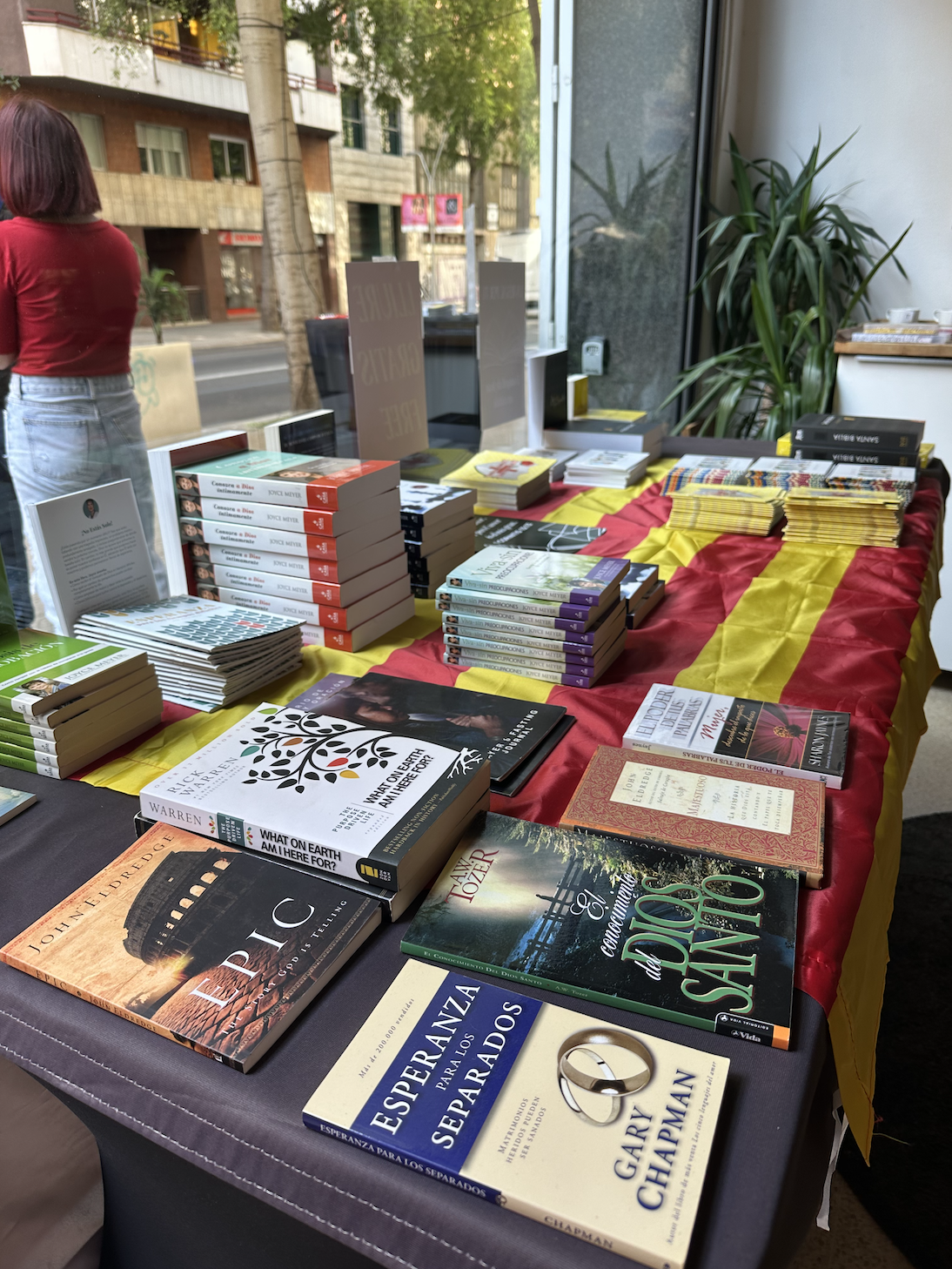
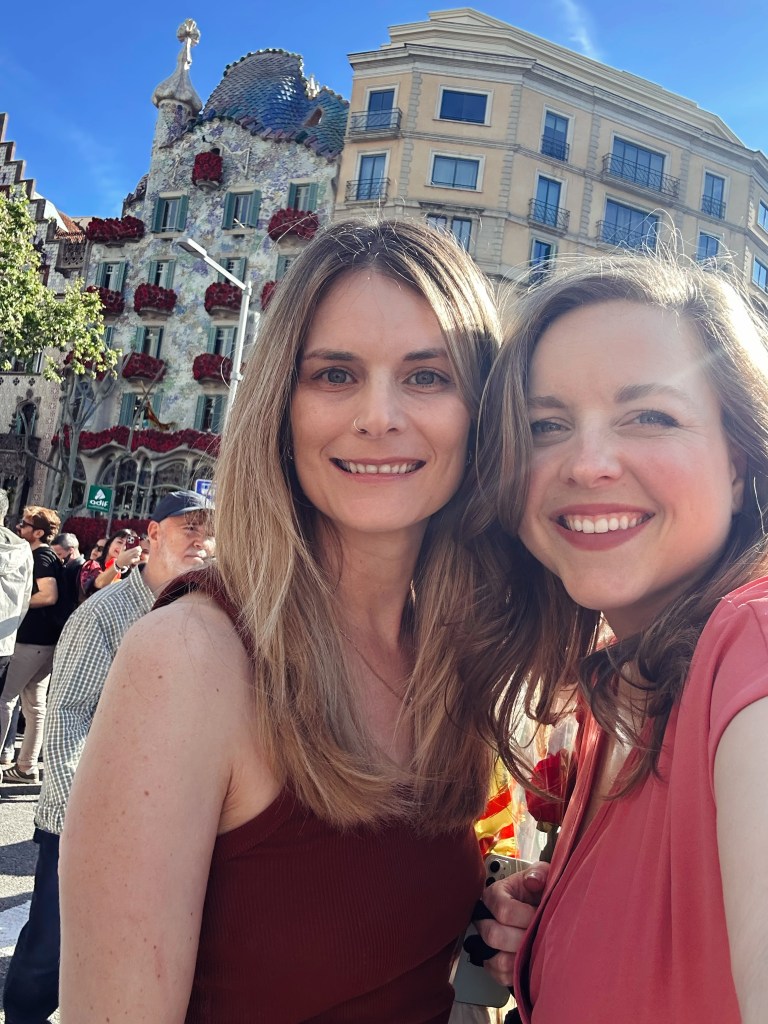
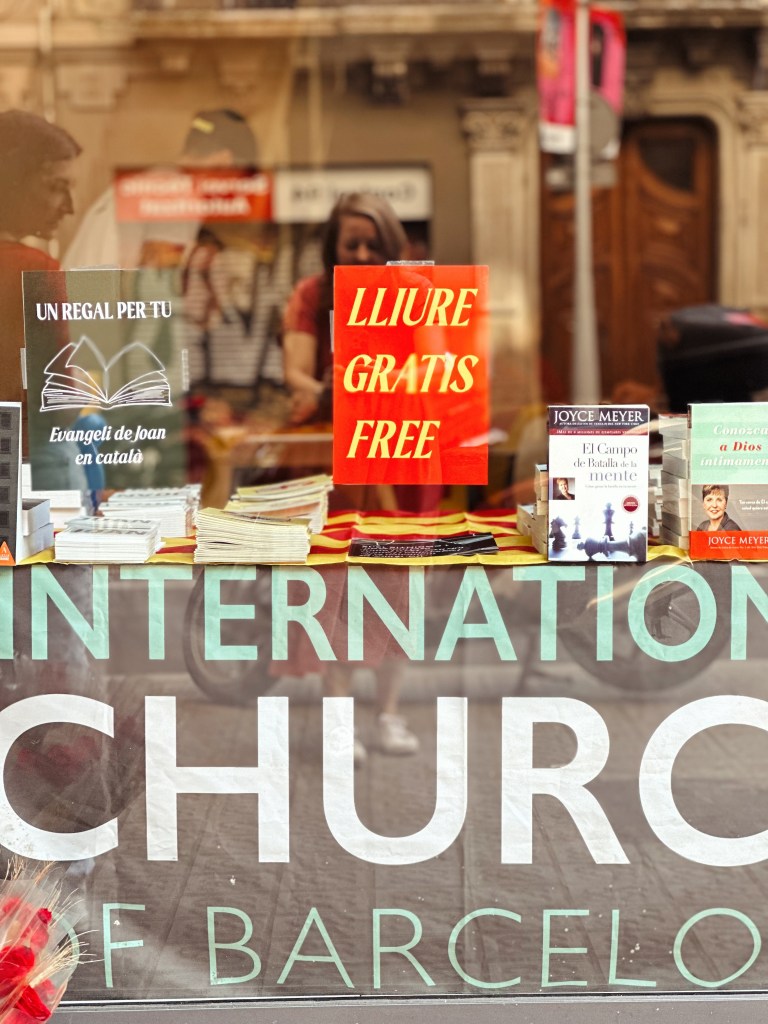
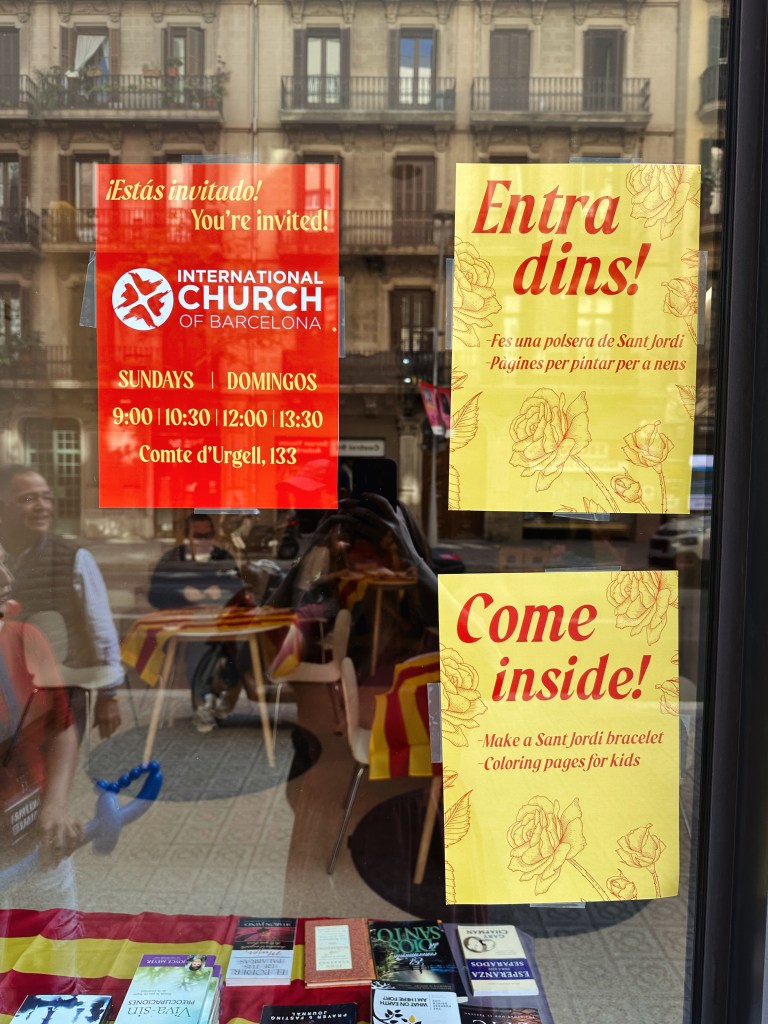
    This year for Sant Jordi, one of Catalunyaโ€™s most beloved holidays, we were thrilled to be right in the heart of the celebration! We hosted a vibrant book booth at our Ministry Center, creating a warm and welcoming space for neighbors to stop by, connect, and enjoy the spirit of the day. Throughout the day, we handed out beautiful roses, custom bookmarks, and copies of the Gospel of John in Catalan. It was a simple yet meaningful way to share the love of Jesus through a tradition deeply rooted in local culture. The response was incredibleโ€”people lingered, shared stories, and many stepped inside to learn more about who we are. Weโ€™re so thankful for the conversations, the smiles, and the seeds planted. Sant Jordi reminded us that the Gospel can shine brightly in everyday moments when weโ€™re present, creative, and full of love for our city.

    Good Friday

    As we head into Easter weekend, I want to offer you a simple, reflective guide to help you slow down and enter into the heart of the Gospel story.

    This โ€œGood Friday Reflectionโ€ is a personal, Scripture-based journey through the final hours of Jesusโ€™ life. Itโ€™s designed to help you pause, worship, pray, and truly sit with Jesus in His suffering. Whether you have 15 minutes or an hour, this guide gives you space to reflect on what Christ walked throughโ€”for you, and for the world.

    Youโ€™ll find Bible readings, prayer prompts, worship song suggestions, and quiet moments to help you engage with Jesusโ€™ story in a deeper way. It’s meant to be a giftโ€”not a checklist. You can walk through it alone, with family, or even share it with a friend.

    So this Friday, I encourage you to make some space. Light a candle, put your phone on silent, and let this be a moment of sacred pause in your week.

    Praying this helps you draw near to Jesus and prepares your heart for the joy of Resurrection Sunday.

    You can access the reflection guide here:

    The Pieta that “rocked” me

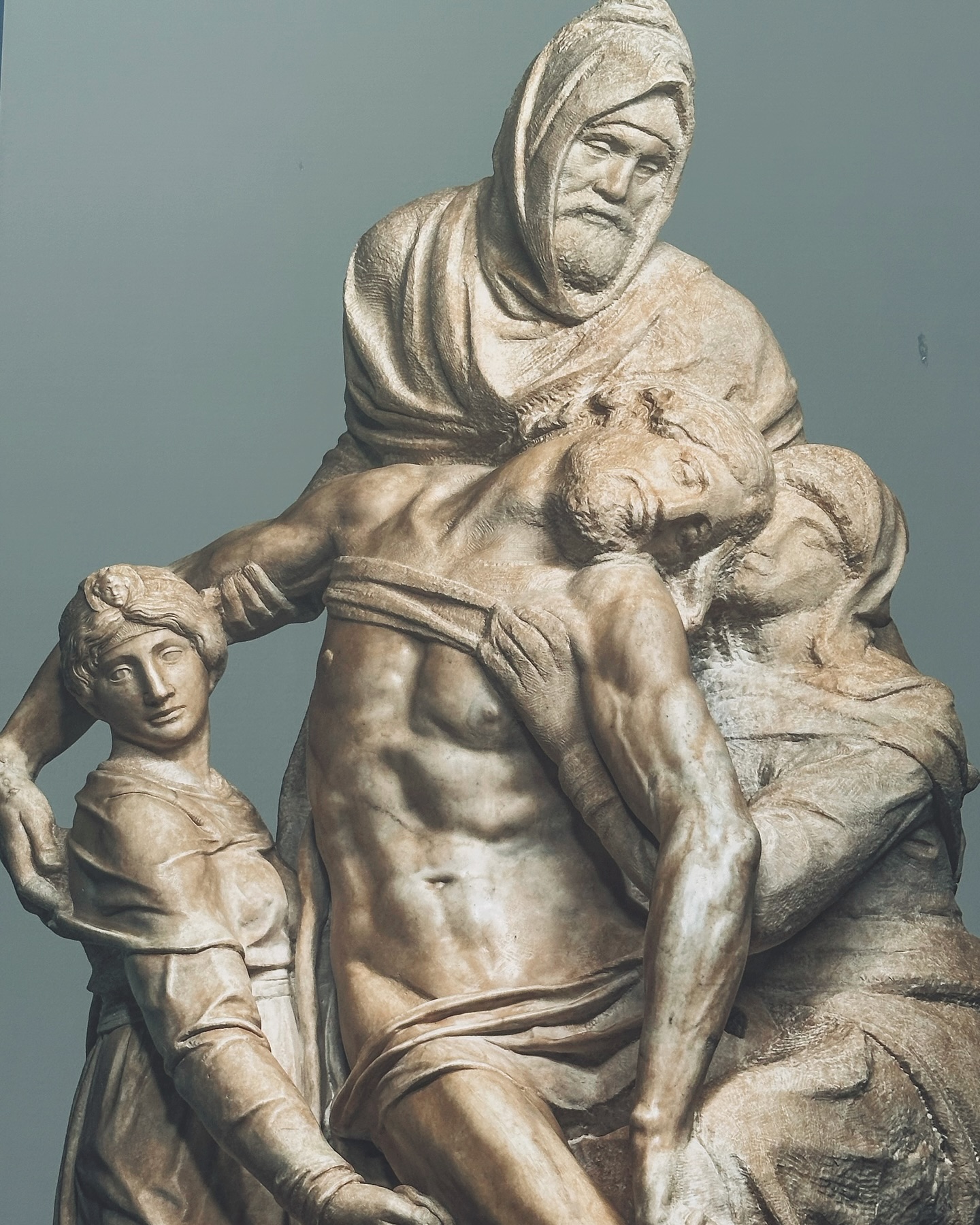
    I had the privilege of getting away for a few days this Holy week and visiting a beautiful friend in Florence. The time was filled with many moments of solitude and sacred pause in the midst of beauty. While I thought the most iconic art I would see would be Michelangeloโ€™s David, I was taken aback with a completely different piece. Michelangelo was commissioned and completed 3 “Pietas” in his lifetime. These were sculptures of Mary holding the limp, dead body of Jesus. The one in Florence (Pietร  Bandini) is different than the other 2– as it also depicts what is believed to be Nicodemus.

    Then our tour guide gave us a piece of information that wrecked me: Michelangelo carved his own face into the figure. He saw himself as one who also carried the limp body of Jesus after being sacrificed on the cross. He wasnโ€™t just depicting a biblical sceneโ€”he was entering into it. Carrying the broken body of Christ, grappling with grief, responsibility, and maybe even redemption.

    Thereโ€™s something really holy about thatโ€”how Michelangelo, in the later years of his life, would identify not with the heroic, but with the burdened. It invites us to ask: who are we in the story of Jesus’ death and resurrection? Are we simply observers, or are we bearing His body, His mission, His pain?

    Shame โ‰  Conviction

    SUNDAY SERIES: Gospel of John
    I have the privilege of teaching this past Sunday! We’re moving through the Gospel of John, and it has been a challenging, touching series so far. If you’d like to listen along, you can PODCAST the teachings. Below is just a snapshot of this past Sunday:
    This past Sunday, we explored one of the most powerful encounters in Scriptureโ€”Jesus and the woman caught in adultery (John 8:1-11). Itโ€™s a story of shame, conviction, and the radical grace of Jesus.

    Imagine this: A woman is caught in adultery, dragged into the temple courts, and thrown before Jesus. The religious leaders donโ€™t care about herโ€”they just want to trap Jesus. According to the law, she deserves death by stoning. But instead of engaging in their game, Jesus kneels down and writes in the dirt. When they press him, he finally speaks:

    โ€œLet any one of you who is without sin be the first to throw a stone at her.โ€

    One by one, the accusers drop their stones and leave. Jesus turns to the woman and asks, โ€œWhere are they? Has no one condemned you?โ€ When she says no, he replies, โ€œThen neither do I condemn you. Go now and leave your life of sin.โ€This story reveals the heart of Jesus: He doesnโ€™t condemn usโ€”he sets us free.

    1.) Jesus Took Our Shame
    Every one of us has made mistakes. Shame tells us weโ€™re unworthy, that weโ€™ll never be good enough. But Romans 8:1 reminds us: There is now no condemnation for those who are in Christ Jesus. Jesus carried our shame to the cross so we wouldnโ€™t have to. If youโ€™re holding onto guilt from your past, itโ€™s unnecessary weight. Jesus already paid for itโ€”drop it and walk in freedom!

    2) Shame โ‰  Conviction
    We often confuse these two. Shame attacks our identity (I am bad), while conviction speaks to our actions (Iโ€™ve done something bad). It’s the difference between “God is so disappointed in me” and “God has better for me”. Shame pushes us away from God; conviction draws us closer. Proverbs 3:11-12 reminds us that God disciplines us because he loves us. His goal isnโ€™t to make us feel worthlessโ€”itโ€™s to transform us into who he created us to be.

    3.) Jesus Cares Deeply About Transformation
    Jesus didnโ€™t just forgive the woman; he called her to a new life.โ€œWhere are they? Has no one condemned you?โ€ He wasnโ€™t searching for an answer, he was getting HER to search for the answer. Think of ADam and Even hidden in shame in the Garden… “Where are you?” was a not a physical question, but an emotional one. Peter after his betrayal is eating breakfast with Jesus. Jesus asking Peter “Do you love me?” was a redemptive moment for Peter to reclaim His love for Jesus. To cover his shameful denials. 
    God does not ask questions for information, but for our transformation. 

    4.) Itโ€™s Not Our Job to Judge Others
    We love the part where Jesus shows grace to the womanโ€”but we often forget that weโ€™re also in the shoes of the Pharisees sometimes. Have you ever held a stone in your hand? Maybe not literally, but in your heart? Maybe youโ€™ve judged someone silently, looked down on someone struggling with sin, or thought at least Iโ€™m not as bad as them. Romans 2:1 warns us: You may think you can condemn such people, but you are just as bad, and you have no excuse!  Yikes. Jesus reminds us that judgment isnโ€™t our job. Our role is to bring people to Jesus for transformation, not condemnation. When we judge others harshly, itโ€™s often because we havenโ€™t fully received the grace of Jesus ourselves. If weโ€™re still holding onto our own shame, weโ€™re more likely to throw it at others. 

    Do you bring people to Jesus to be stoned, or do you bring them to Jesus to be transformed?So hereโ€™s the challengeโ€”are you carrying shame Jesus already took? And are you still holding a stone in your hand, ready to judge? Letโ€™s drop both and walk in the freedom heโ€™s given us.